Black Spout Homestead
Archaeological excavation of an Iron Age Homestead near Pitlochry.
Towers, Ring-forts and Homesteads
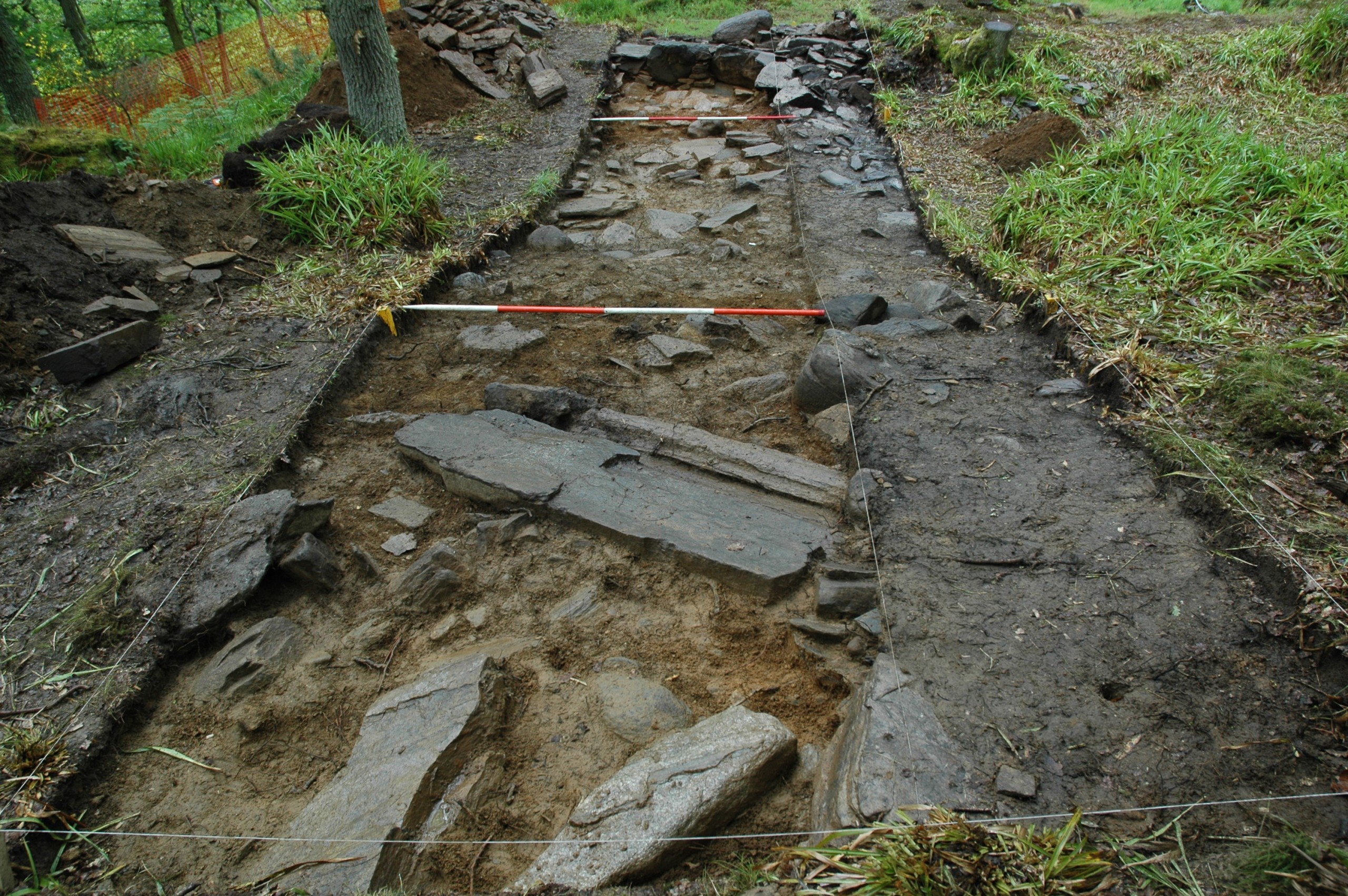
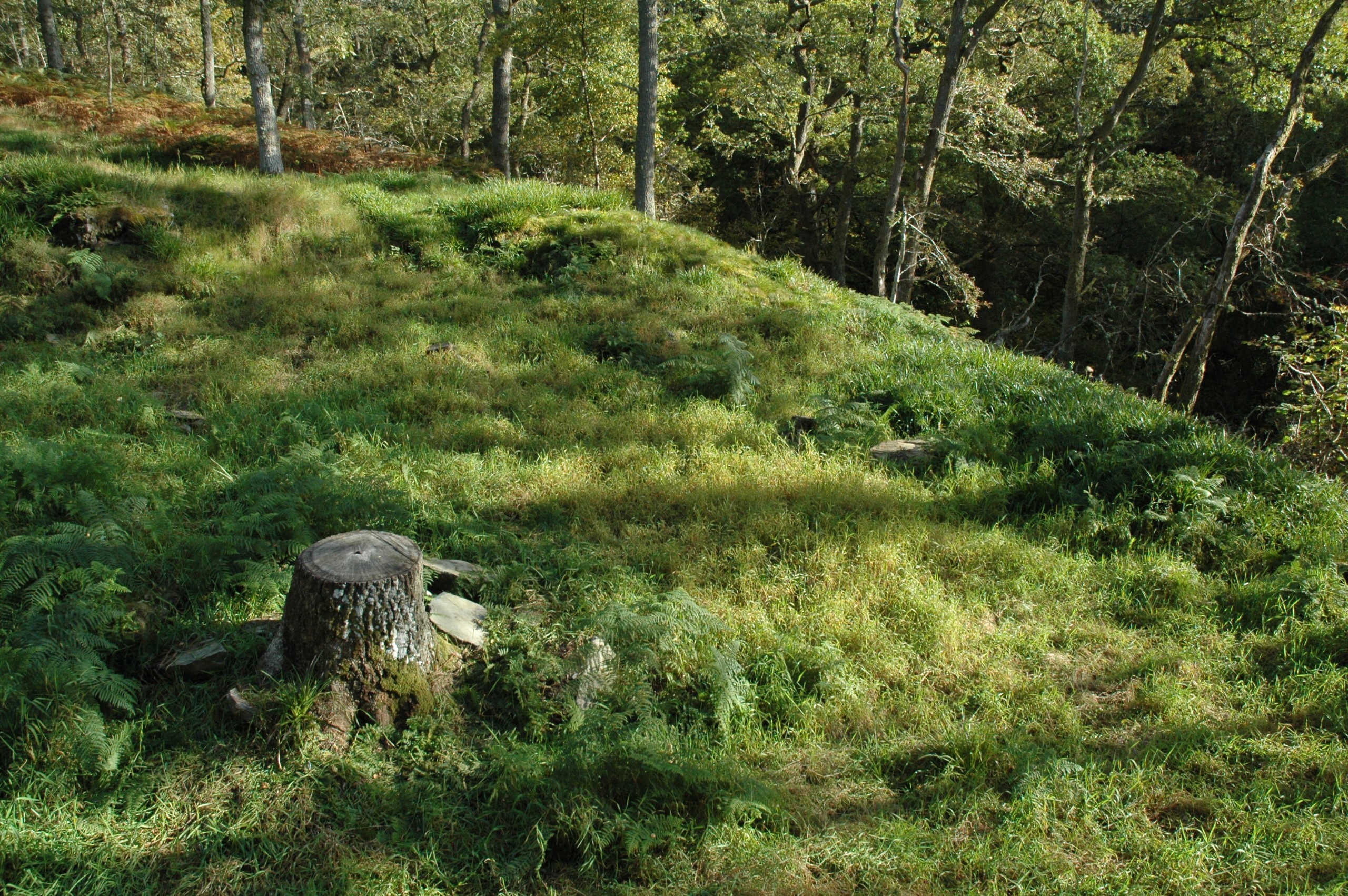
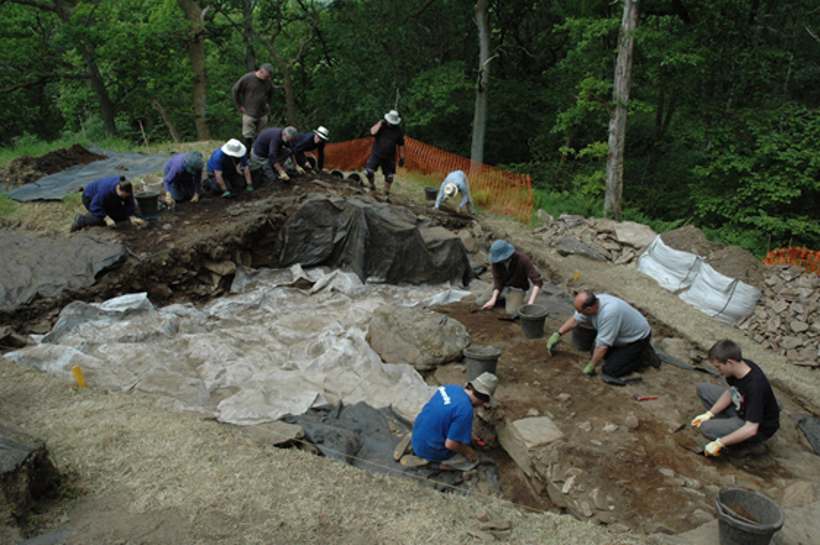
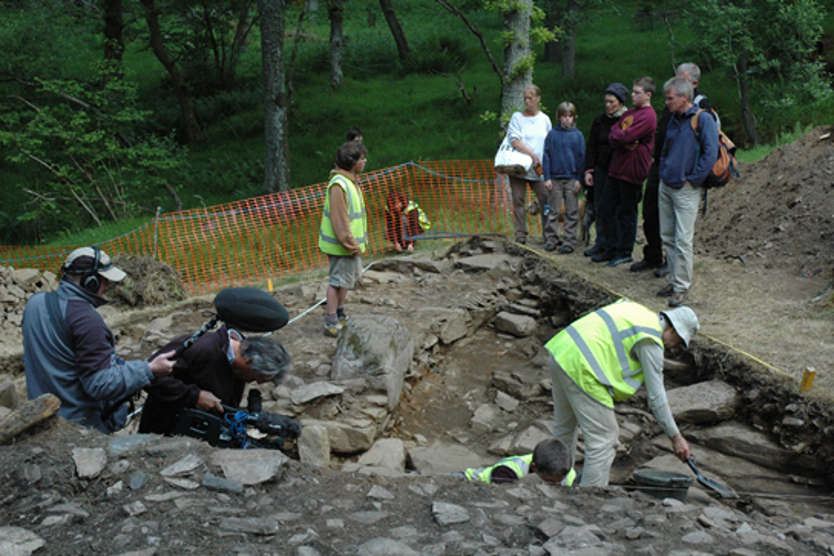
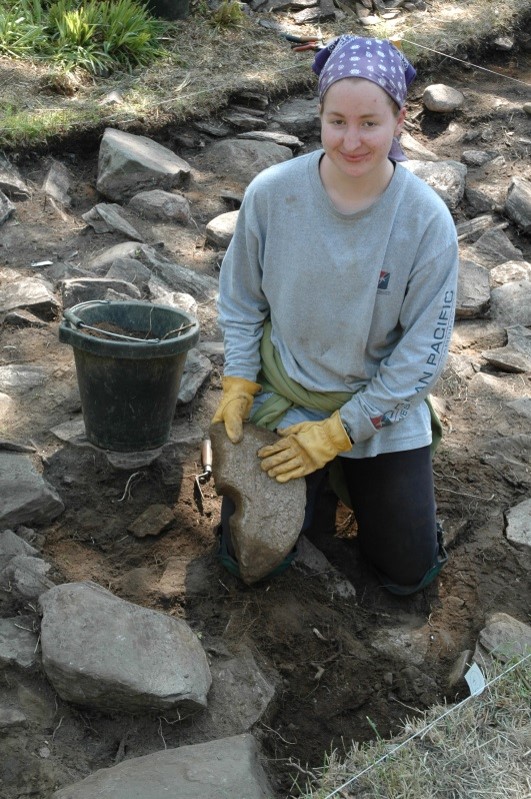
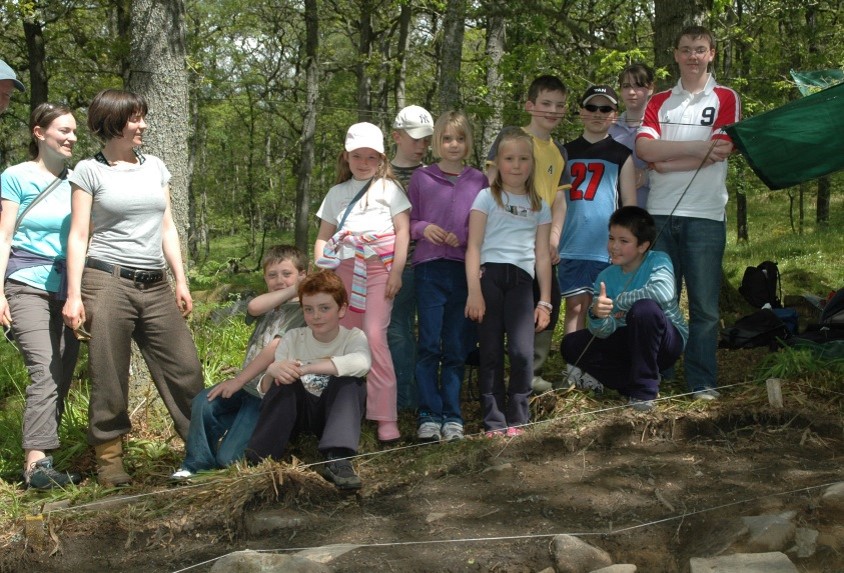
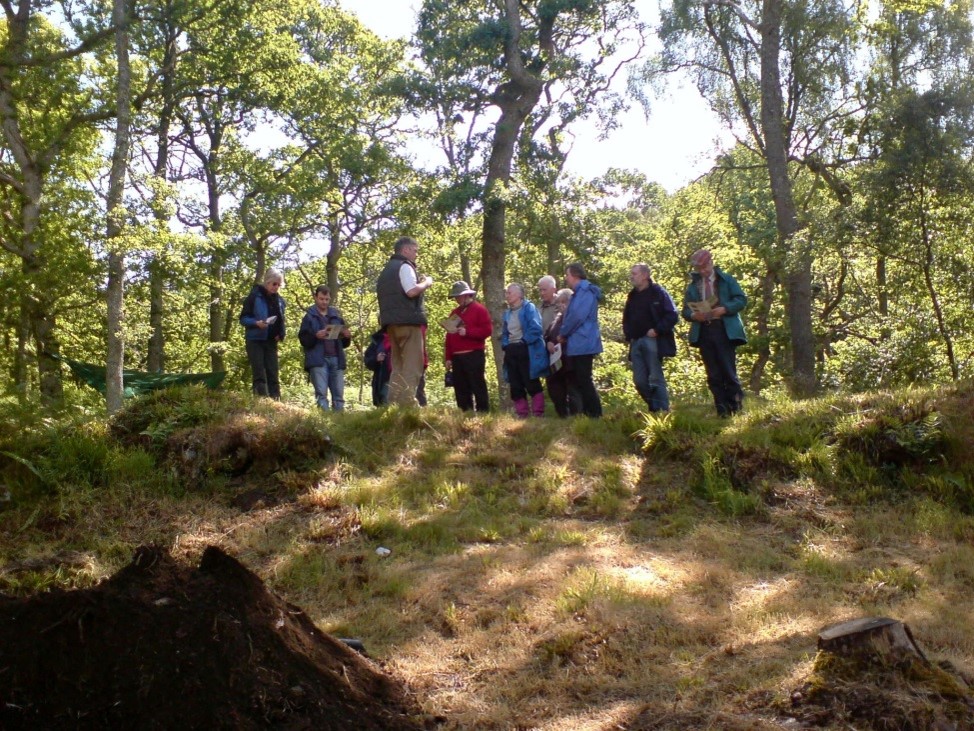
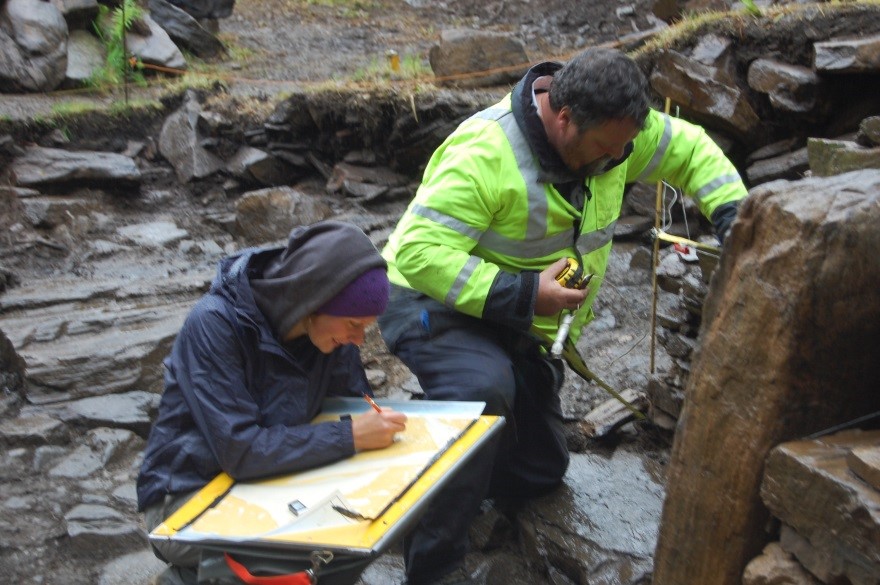
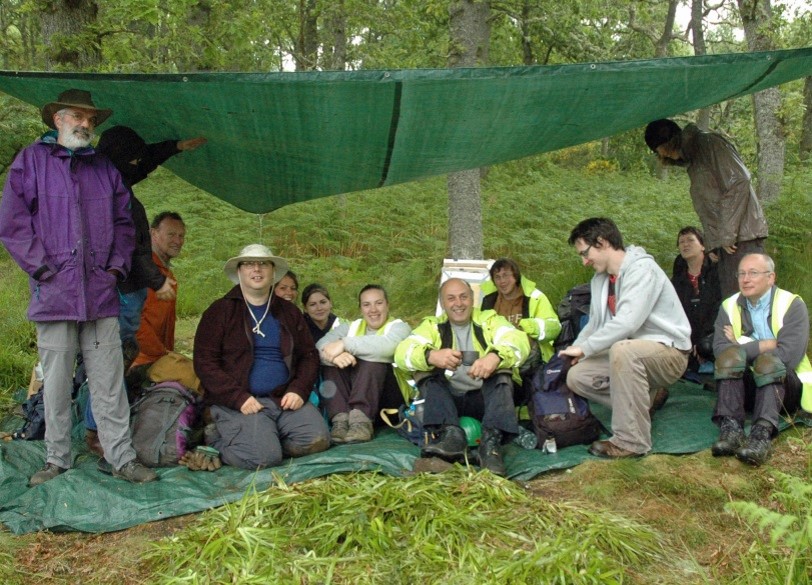
Between 2005 and 2009, the Trust excavated a large Iron Age building in the Black Spout wood near Pitlochry. Each summer, as part of Perthshire Archaeology Month, Trust staff, volunteers and archaeology students carefully uncovered the site, which is perched on a cliff above Edradour Burn, near the waterfall from which the wood takes its name.
The site is of a type first noted by Pennant in his A Tour in Scotland of 1772, where he refers to them as ‘towers’. They were first studied in detail by the place-name scholar and archaeologist Professor William Watson prior to WWI. He described them as 'ring-forts', identifying around 50 examples which shared the characteristics of having circular walls around 20m in diameter and having substantial stone-built enclosing walls, 2-4m thick. Watson suggested that the ring-forts were the defences of Iron Age Chiefs.
Further to Watson’s excavation at Borenich, above Loch Tummel, there was little interest in the sites until Margaret Stewart, of the Perthshire Society of Natural Science, excavated the sites at Litigan and Queen’s View in the 1970’s. Stewart argued that the sites were much later, perhaps from the 7-10th centuries, and referred to them as ‘homesteads’, arguing that were not built for primarily defensive reasons. Finally, two sites were excavated near Blair Atholl in 1980, prior to the construction of new A9. Radiocarbon dating at these sites confirmed them to be of Iron Age date, around 100 BC to AD 250.
The Excavations
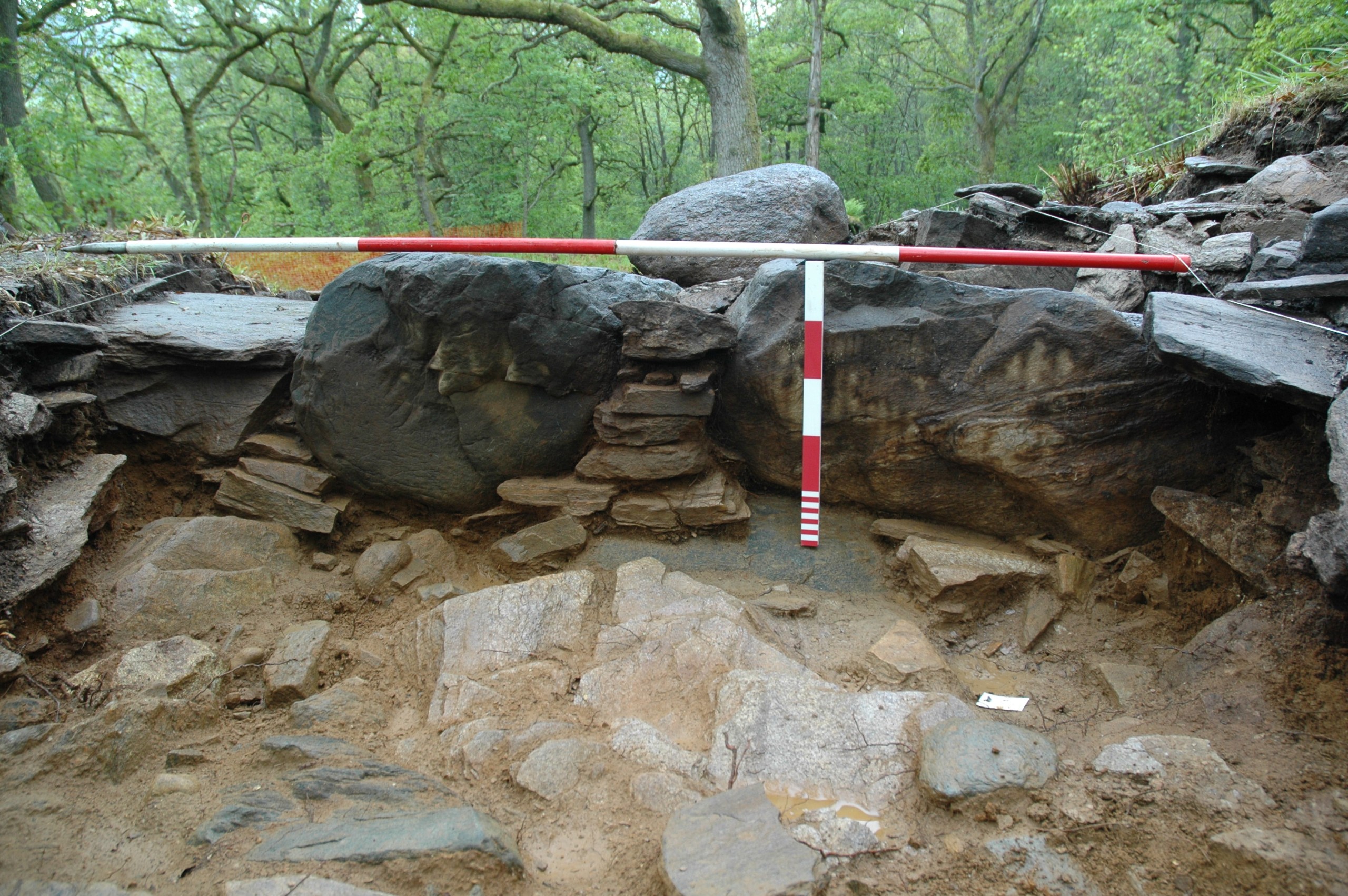
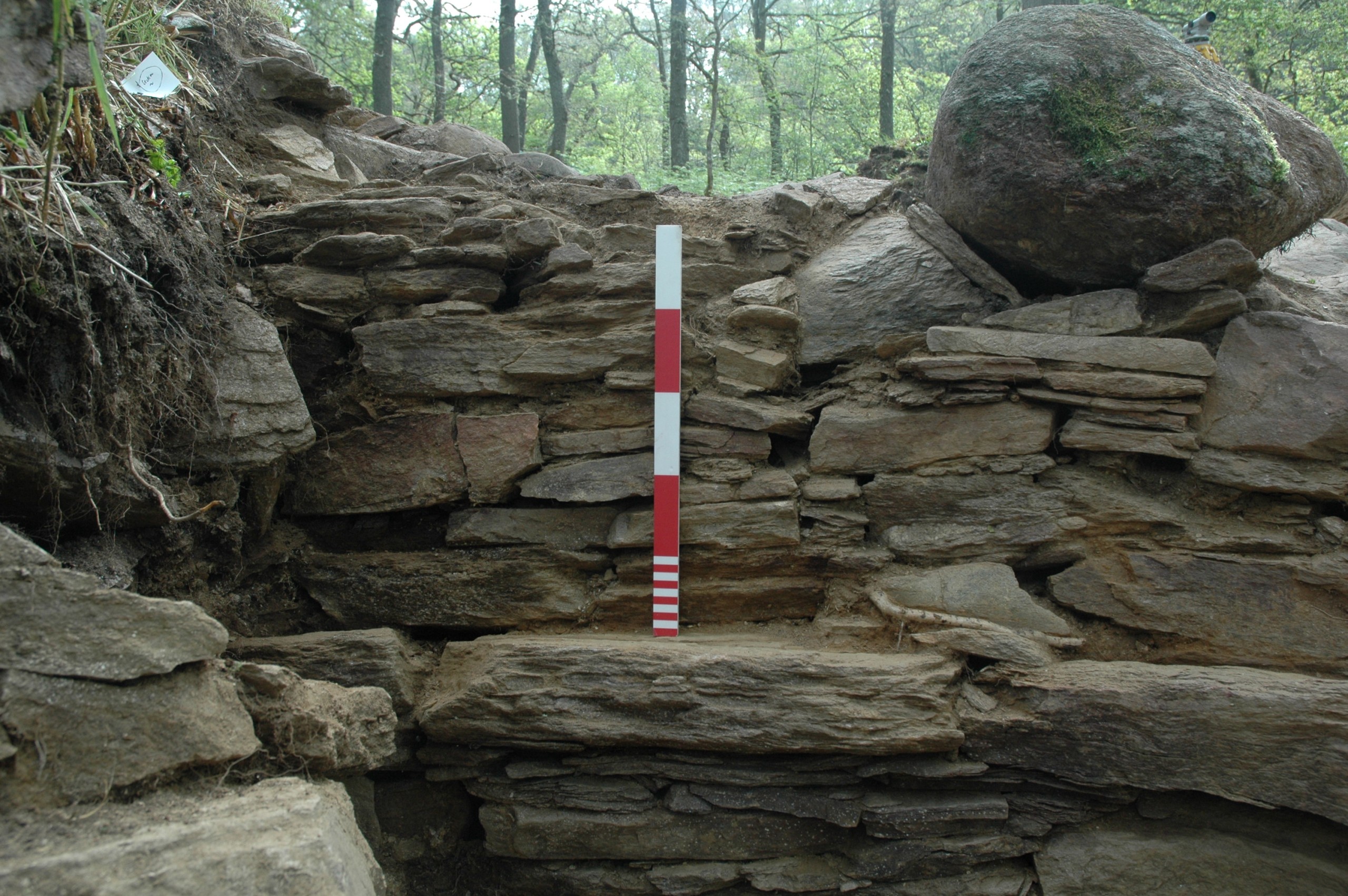
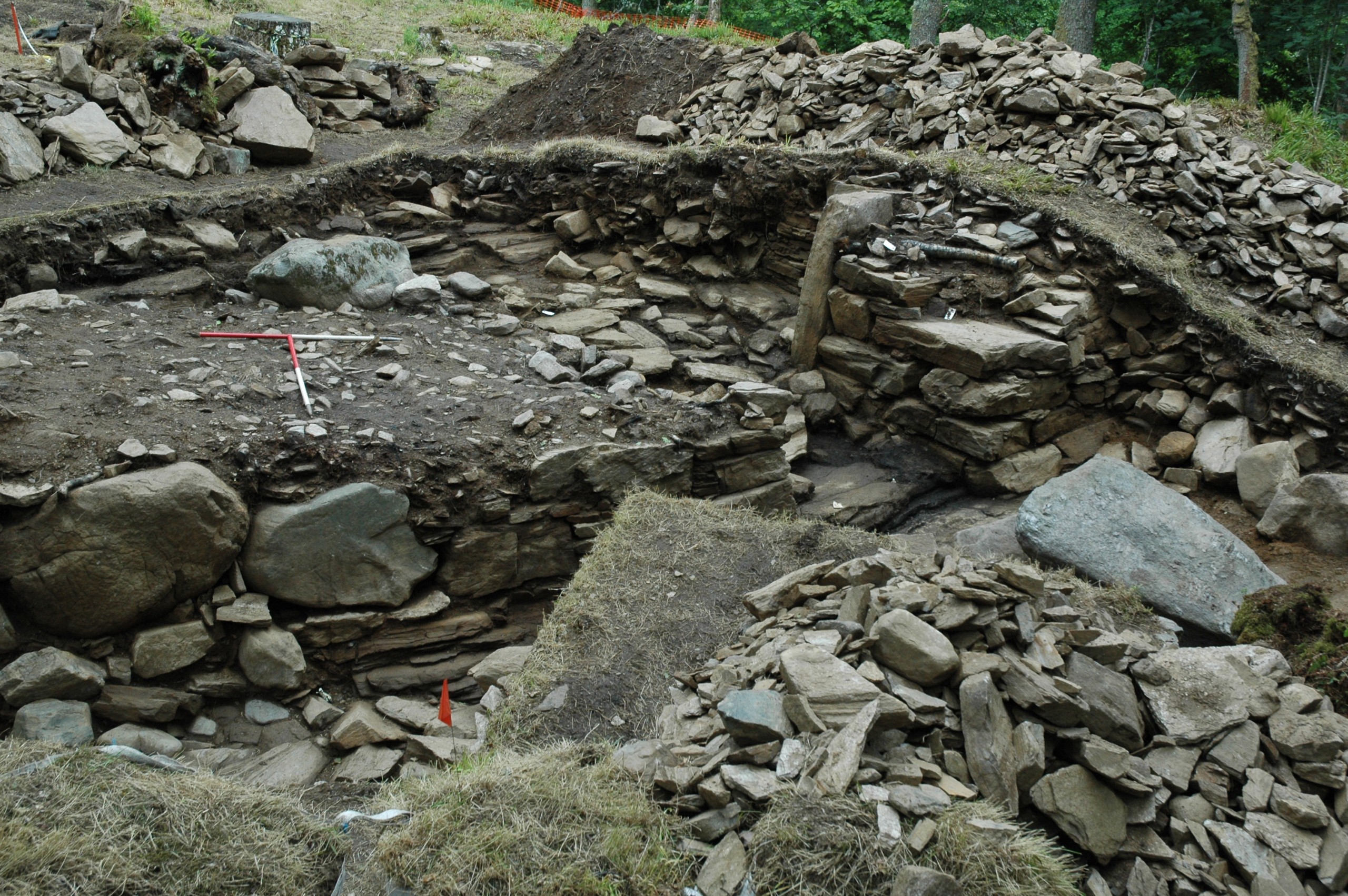
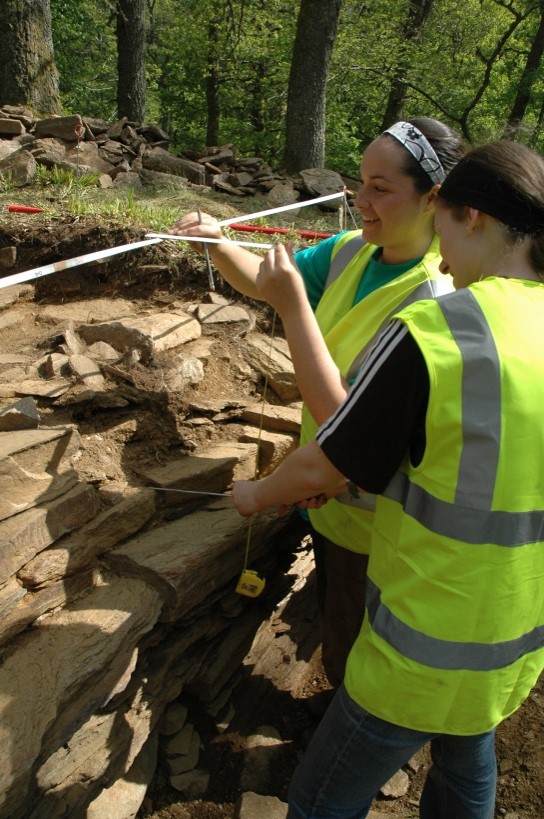
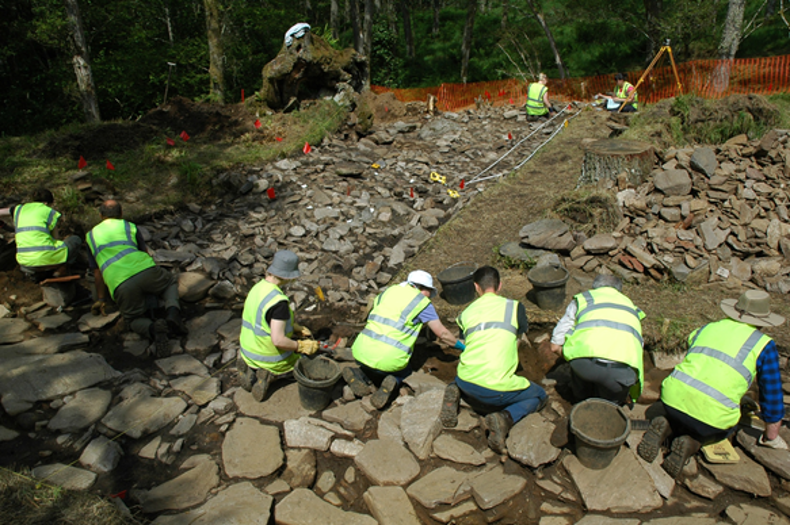
Over the five years of excavation the nature of the enclosure wall was shown to be very complex, being completely circular internally, but thicker downslope towards the entrance to the site. The wall varied in thickness from 1.75m (upslope) to around 3m (at the entrance) and was also found to have a shelf, or ‘scarcement ledge’, built into the inside face of the upslope wall. The walls were found to be built on foundations of large boulders around 0.5m and to be made of much smaller blocks of coursed local stone with smaller pointing stones. The wall was expertly made using large rounded boulders as through stones to hold the wall together, in a similar fashion to dry stone dykes. An intra-mural cell was found built into the thickest part of the wall beside the entrance. It is likely that this weak point in the construction resulted in a collapse of the wall, which then resulted in a rebuilding of the entrance.
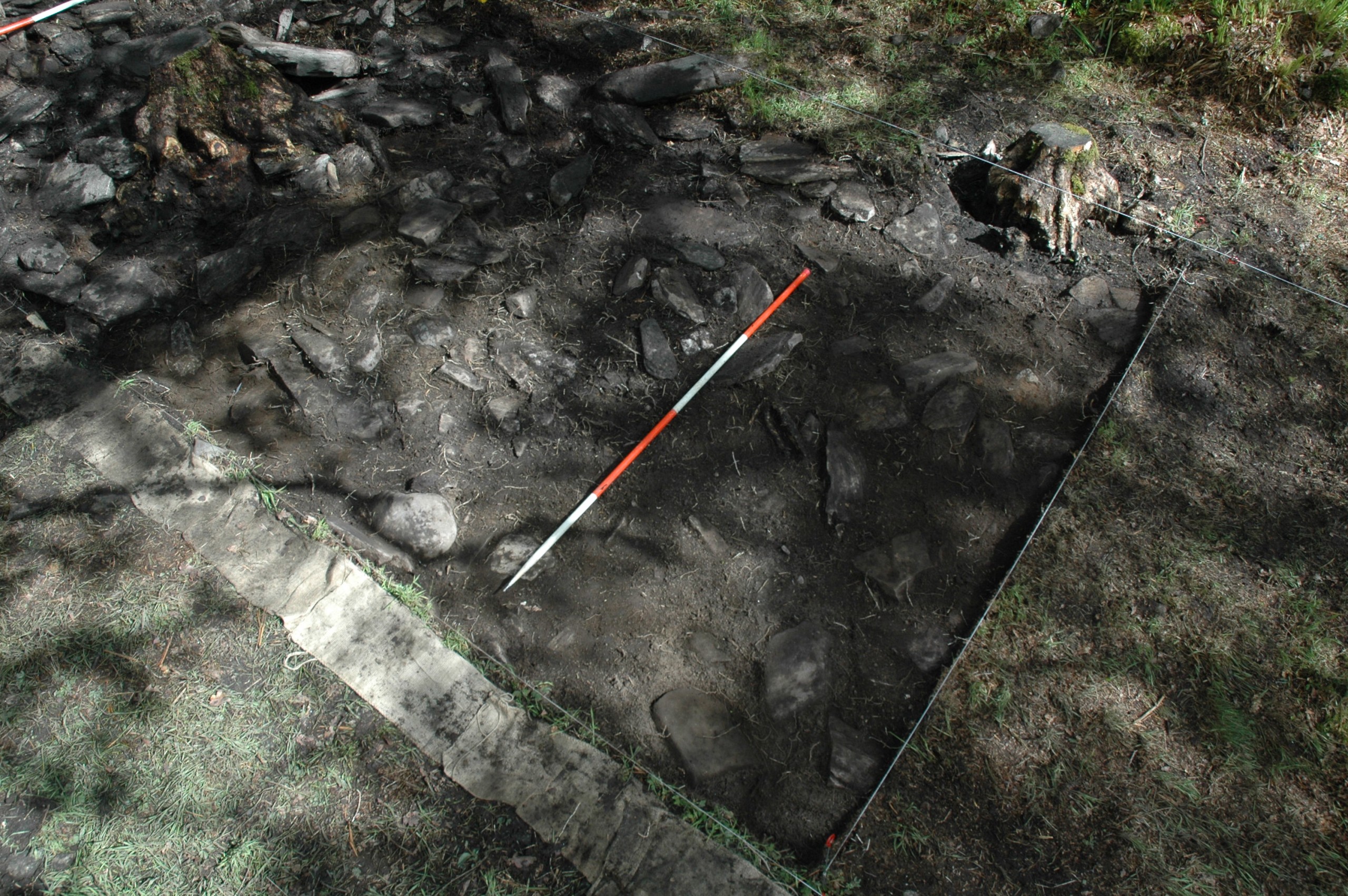
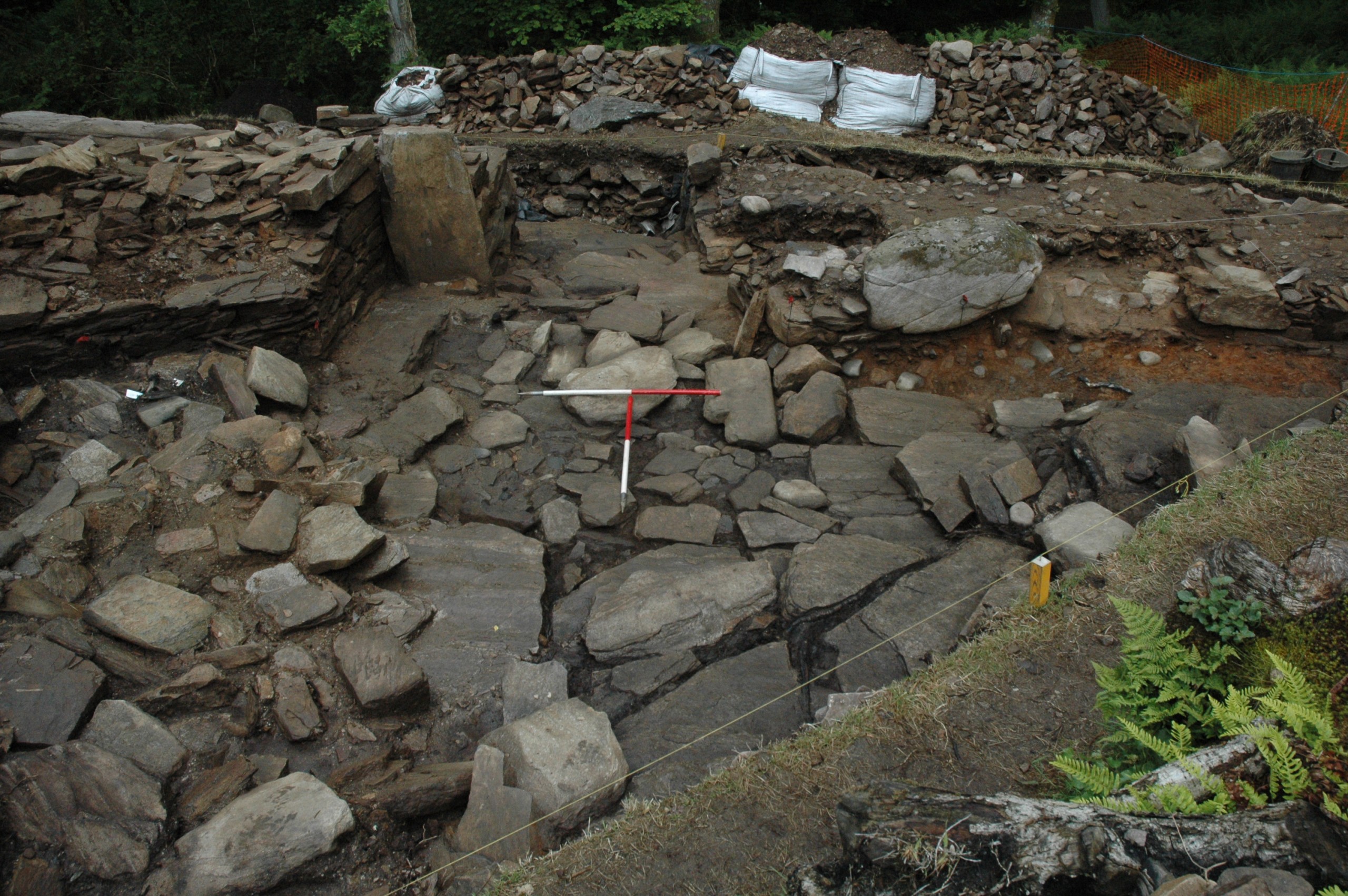
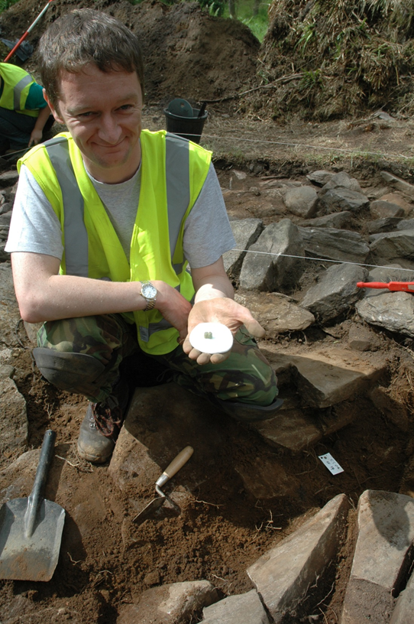
While the interior of the site had been much disturbed by tree-root action, paved floors survived in some areas. Small finds from these occupation layers included fragments of rotary querns, loom and thatch weights and a glass toggle, or pendant, which was made of re-used Roman bottle glass. There was very little evidence of the massive timber construction that would have been an important part of the building.
The site has produced a range of radiocarbon dates from charcoal which confirm an Iron Age date from around 250 BC to 50 AD. The site is of particular interest because it is the first time that homesteads in Perthshire have produced features such as intra-mural cells and scarcement ledges, which are more commonly found within the broch-building tradition.
Research and Publication
The excavations are currently being written up and will include studies of the Iron Age environment, reconstructions of how the building may have been configured, studies of the querns and other finds, and a paper on what the place-names associated with these sites can tell us. The Perthshire homesteads, if that term is still appropriate, may indeed have been far more broch-like than thought in recent decades. Indeed, Pennant, with his reference to towers, may have been more accurate than he has been given credit for. Substantial timber buildings within impressive squat tower structures, their strategic positions in the landscape may not have been selected for defence, but certainly for display.